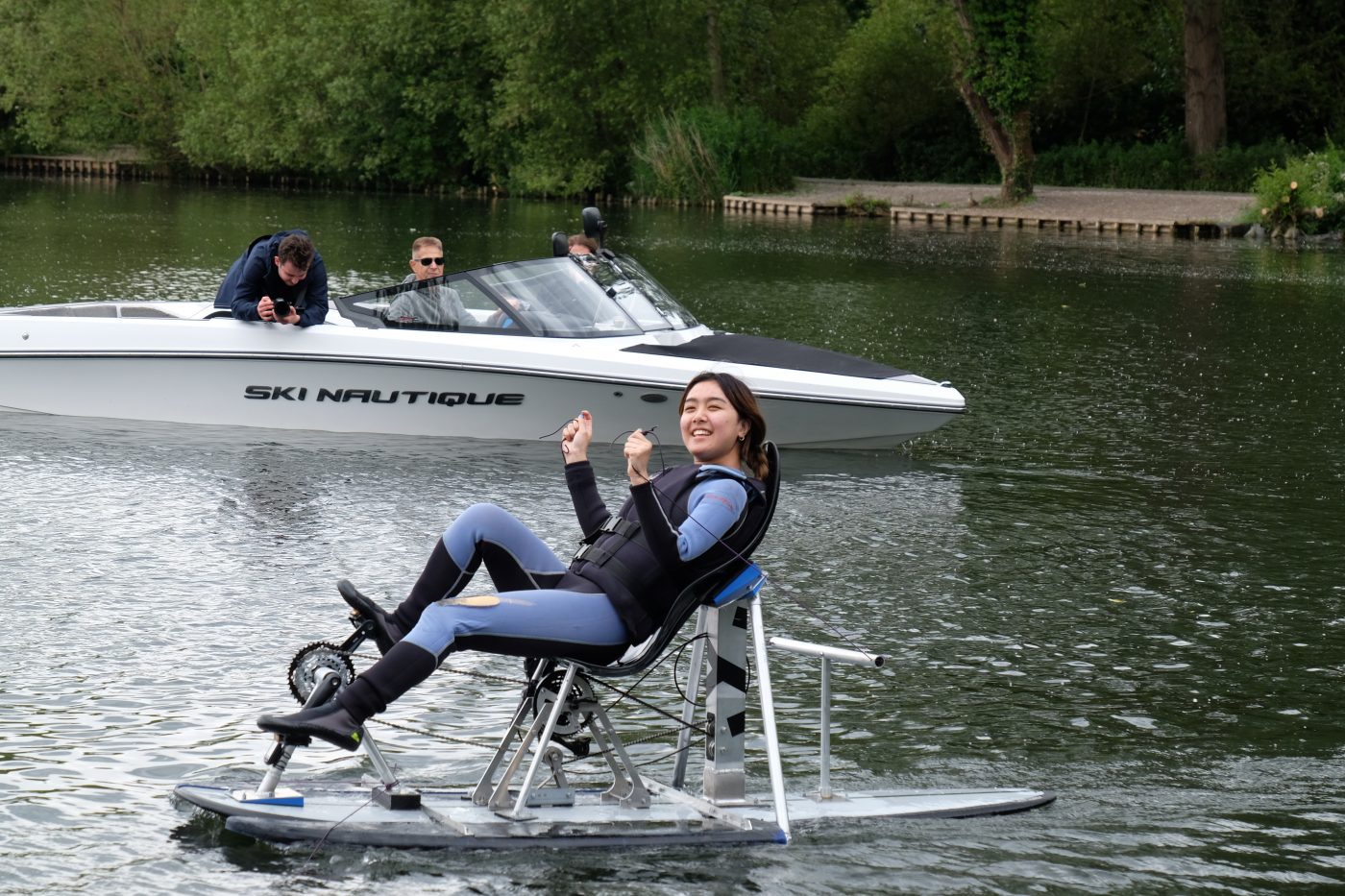
Hydrofoil Bike
Dates: October 2023 - June 2024 | Commissioner: Marc Masen, David Nowell
The human-powered hydrofoil bike project at Imperial College London was ran for several years as part of the third-year Design Make and Test (DMT) group design module, where students work in small teams to tackle open-ended engineering challenges. In this course, which accounts for a significant portion of the year’s assessment, students operate like small engineering consultancies by developing a concept from initial idea through to a fully tested prototype. In 2023-24 I supervised a group of four students who were focusing on the structural design and manufacturing of the vehicle (Amaya Lawson-Fernandez, Lucy Di, Oliver Telfer and Cosmo Prince).
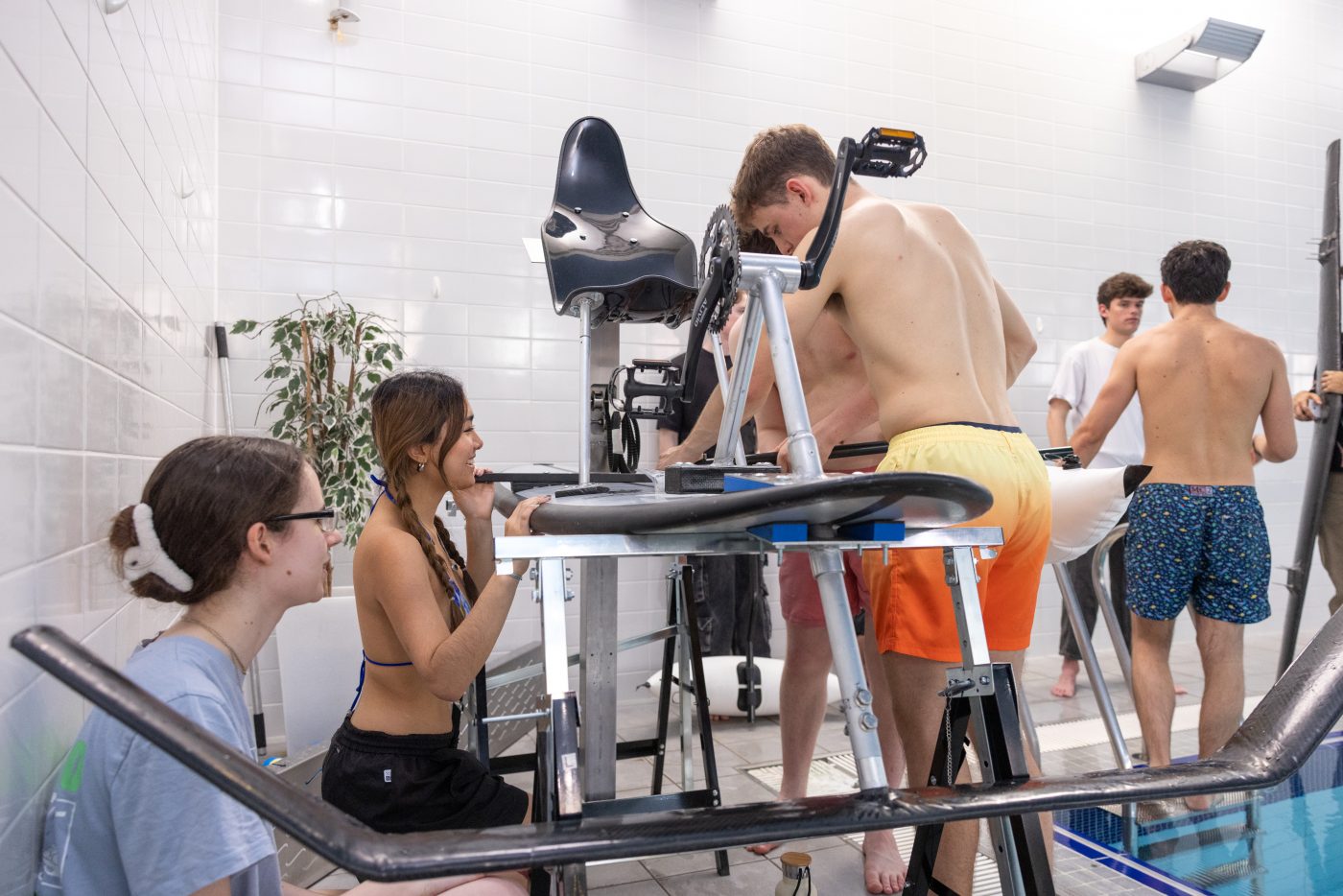
The aim of the project was to design and build a bicycle capable of lifting itself above the water using hydrofoils, thereby reducing drag and enabling efficient propulsion powered solely by the rider. This required the team to integrate knowledge from across the mechanical engineering curriculum, including hydrodynamics, lightweight structures, and drivetrain design. Students began with concept generation and feasibility studies, comparing different foil geometries and stability strategies before converging on a final design.
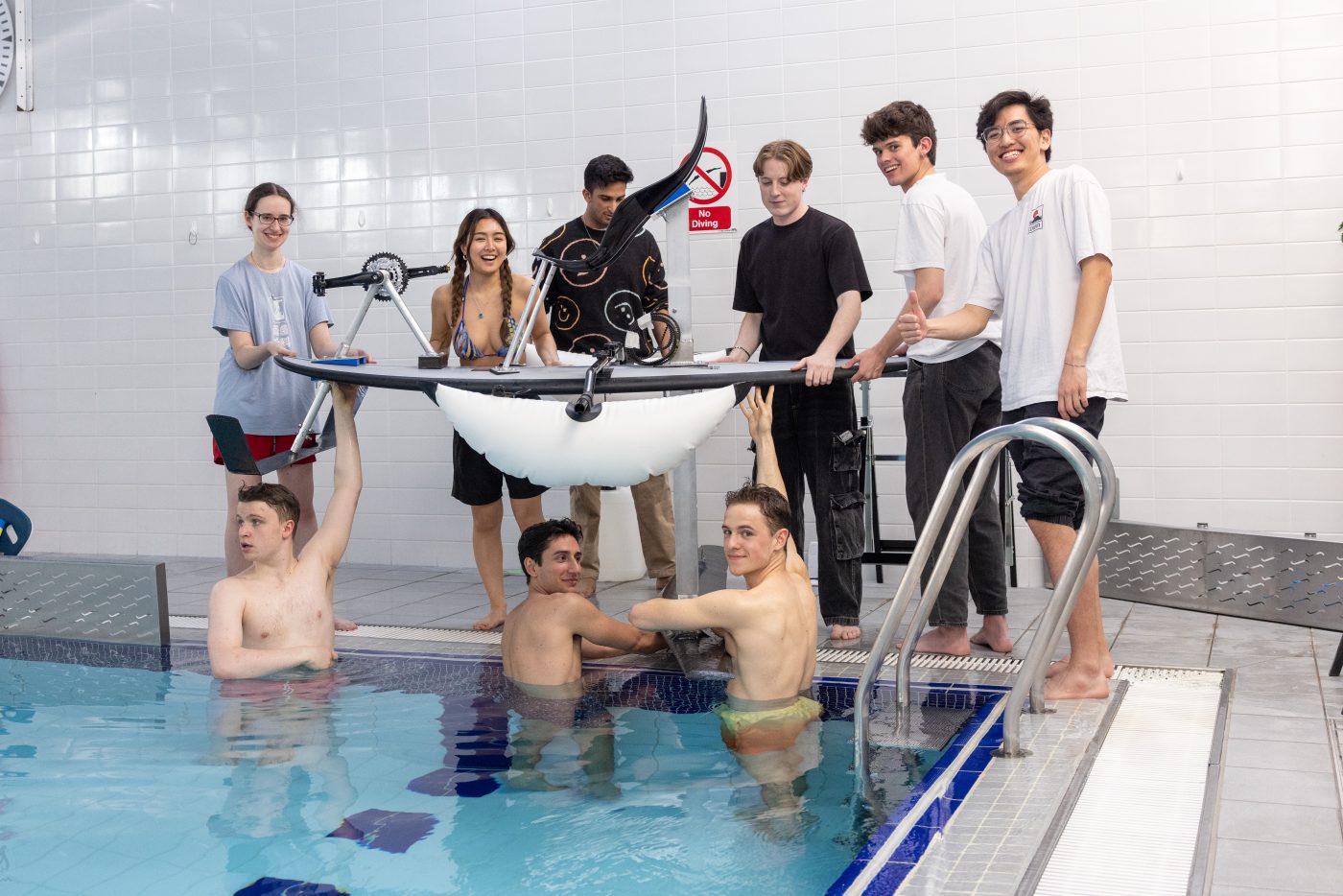
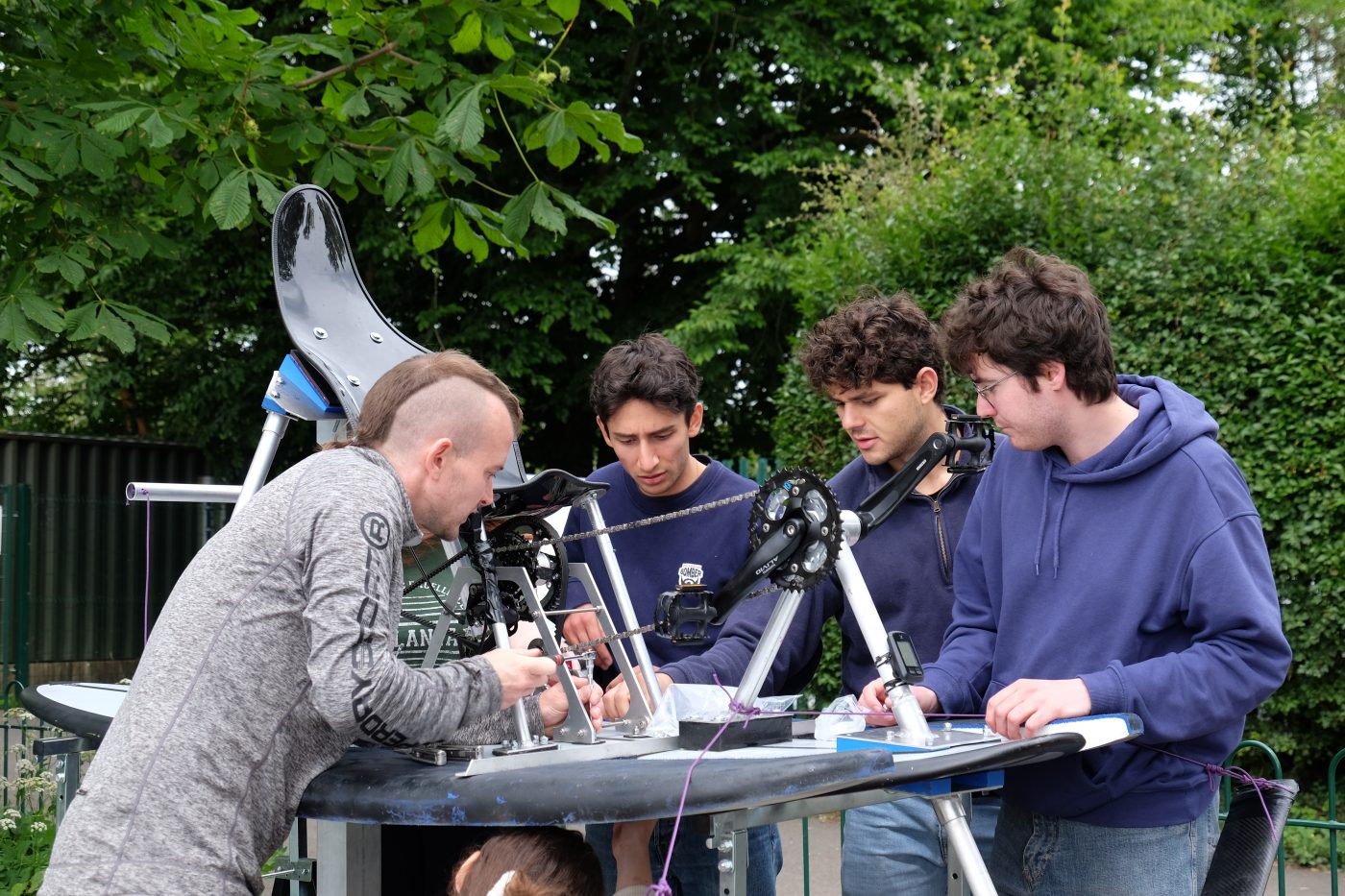
A key challenge in the project was achieving stable lift and control while maintaining sufficient propulsion from a human rider. The team had to carefully balance competing requirements: minimizing weight while ensuring structural integrity, and maximizing hydrodynamic efficiency without compromising stability. This often involved computational modelling alongside physical testing, reflecting the DMT emphasis on combining simulation with hands-on experimentation. Students also had to consider manufacturability and cost, producing components using workshop facilities and standard engineering processes available within the department.
The project culminated in a prototype that was tested in the university swimming pool and at the Rickmansworth Waterski Club, along with being demonstrated at the end-of-year DMT exhibition, where students present their designs to peers, staff, and external visitors. Such exhibitions showcase the breadth of innovation in the programme, from transport solutions to robotics and healthcare devices. Beyond the technical outcome, the hydrofoil bike project exemplified the broader goals of the DMT course: developing practical engineering skills, teamwork, and the ability to translate theoretical knowledge into real-world systems through design, manufacture, and testing.