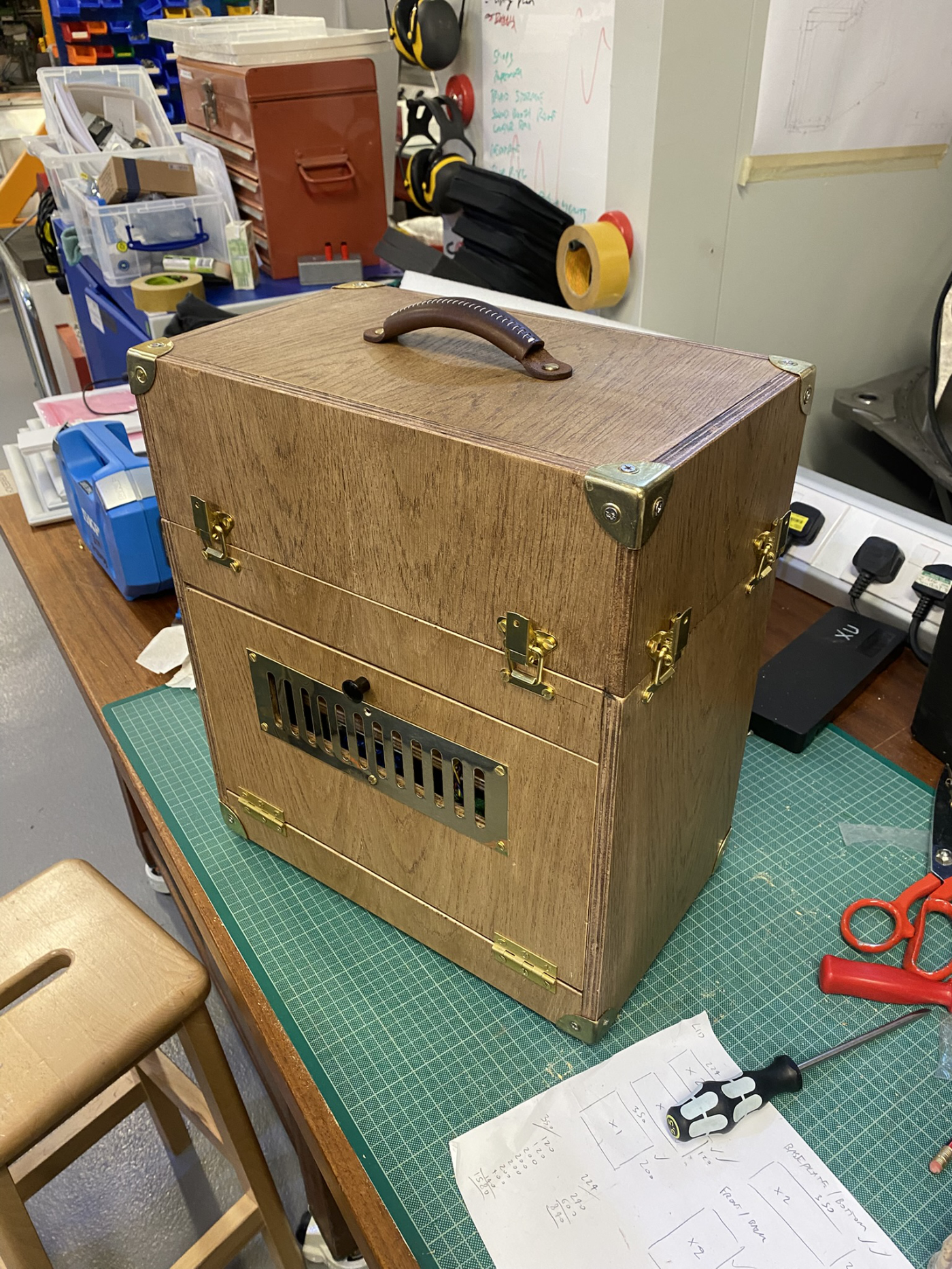
Engineering of the Music Box
A fascinating talk exploring how mechanics, electronics, and control systems combine to turn punched paper into live, perfectly timed acoustic music you can see as well as hear.
Talk: Yes | Workshop: No | Course: No | Audience: Public, Families, Primary School, High School, Sixthform, College, Undergraduate,
This talk explores the complete engineering journey behind a robotic music box, from initial concept through design, manufacture, and testing. Beginning with the mechanical principles that allow motion to become music, it explains how the instrument’s core components—tines, rollers, drive systems, and frame—were selected, modelled, and built to achieve both precision and reliability. The session highlights the practical design decisions, trade-offs, and prototyping stages that shaped the final instrument.
It then delves into the electronics and control engineering that make the system perform with musical accuracy. An Arduino-based controller, stepper motor drive, and optical feedback sensor work together in a closed-loop system that constantly monitors motion and corrects timing in real time. The talk shows how calibration, testing, and iterative refinement were used to eliminate drift, manage friction, and ensure the mechanism could maintain steady tempo even under changing conditions.
Finally, the session reflects on the testing and validation process that turned a working prototype into a dependable performance instrument. By combining mechanical engineering, embedded systems, and experimental evaluation, the project demonstrates how careful measurement and problem-solving transform an idea into a functional machine. The result is not just a music box, but a case study in applied engineering design—one that makes both the science and the music visible.
It then delves into the electronics and control engineering that make the system perform with musical accuracy. An Arduino-based controller, stepper motor drive, and optical feedback sensor work together in a closed-loop system that constantly monitors motion and corrects timing in real time. The talk shows how calibration, testing, and iterative refinement were used to eliminate drift, manage friction, and ensure the mechanism could maintain steady tempo even under changing conditions.
Finally, the session reflects on the testing and validation process that turned a working prototype into a dependable performance instrument. By combining mechanical engineering, embedded systems, and experimental evaluation, the project demonstrates how careful measurement and problem-solving transform an idea into a functional machine. The result is not just a music box, but a case study in applied engineering design—one that makes both the science and the music visible.